


The People Paradox: Your Greatest Asset and Your Biggest Challenge
Over the last 35+ years, I've probably had well over 100 people report to me. I first became a manager of people in 1990, when I was promoted from Business Development to Relocation Director at Jon Douglas Company about two years after I moved to LA. I had no idea what I was doing.
It was a rough start. A Coordinator who had been there much longer than I had thought that they should have gotten the role, so they did everything they could to undermine me. It was quite an intro to leadership. It didn’t come naturally to me. Thankfully, I had a good mentor to guide me, a branch manager who had been temporarily running the department. I was impatient and didn’t understand why everyone didn’t have the same drive and ambition that I did. I didn’t come from a background where I got praise, so I didn’t really understand why it mattered.
I’ve had a lot of bosses throughout the years. Some were amazing and some not so much. My first boss right out of college was the most awful leader to ever walk the earth. She was cruel and uncaring. The ones I liked best left me alone for the most part and gave me an ‘atta girl’ just when I needed it. Later in my career, my favorites happened to be women, and we are still friends to this day. I learned it feels good to have someone tell you ‘well done,’ so I made a conscious effort to do it until it came naturally.
Kindness matters.
An example of what leadership is not came early in my career, when I was hired as a Coordinator for a small real estate company. One of the broker-owners acted as the Relocation Director. The company subsequently sold, and I was part of the deal. I moved to their relocation department, which was in temporary space while we waited for a remodel to be completed. The two relocation staff had large, spacious offices. Instead of offering to share a corner of the space with me for a couple of months, they gave me a tiny desk and shoved it into the small kitchen between the full-size refrigerator and the counter with the microwave and coffee maker. I have never been able to stomach the smell of coffee since then. I felt belittled and demoralized. My leaders had taken their payout and moved on. No one was there to protect me. I found a new job within two months. Maybe that was their goal. I was a threat or possibly just an unwanted presence. In hindsight, I realized I should have advocated for myself and refused that working situation. These experiences are just part of the journey.
Sounds like a train wreck.
Throughout the years, I have had some folks with substance/alcohol abuse problems, anger issues, the chronically late, and someone who masterfully managed the art of the medical leave on and off for a year to avoid being terminated. Then there was the entire staff of a business line I managed (that was not relocation), whom I had to fire all at once because they were on the take from vendors, leaving me, one employee, and temps to keep the business going while I rehired and trained a new staff. And let's not forget the temp who flashed the cleaning crew after hours. That was fun. Sadly, I could go on. More terminations and layoffs than I can count while navigating recessions and volatile markets. I can’t really complain about anyone because I hired them, except for a few I inherited through mergers and acquisitions.
But for the most part, I had amazing employees who were smart, empathetic, took initiative, and understood the mission. They were insightful, ethical, and willing to learn, and they always kept the best interests of the clients, company, and agents in mind. Thankfully, I didn't need to micromanage.
What I learned the hard way.
People are people. And they take a crazy amount of time to manage. They have different personalities, and no single management style fits everyone. With some employees, I could be very direct; with others, I needed to sugarcoat it. Conversations can get messy in a hurry. I think that is the hardest part about management. People think employees should adapt to the manager's leadership style when, in fact, the leader needs to be a little more flexible based on the employees. I’m not saying to treat each of them differently; I am saying that catering to different personality styles can go a long way. And experience gets you there. Over time, I learned what to say and how to say it in a variety of situations.
What makes a good leader?
I ultimately survived several large mergers and acquisitions that shook me while they were playing out. As a middle manager, I learned to navigate the leadership team while keeping my employees appeased. It’s a fine line to walk.
I’ve learned that leadership is fluid. Acting in the best interest of the company and the employees may not always be on the same plane. You can’t be friends with your employees. It just doesn’t work because someone will feel left out, or it might cloud your judgment. We must ignore the desperate need to be a beloved leader. If your actions lead to that, cool. But trying too hard will likely fail, and ‘the inmates will be running the asylum’.
You can’t take it personally.
When most of my staff and I were laid off, I bore the weight of it as if it were my decision. Even though it wasn’t. I felt like I'd somehow let them down. But they rallied and spent the month from the announcement date to our last day transitioning their files perfectly. They could have phoned it in, but they didn’t. And that made me really proud.
Some worked for me for over 25 years and would probably still be working with me if we hadn't been laid off in 2017. And I am happy to say I am still in touch with many of them, and they have gone on to do great things or happily retire. So my worries were unfounded.
There’s a learning curve.
I get a daily email from an entity called ‘Admired Leadership Field Notes’ about what it takes to be a good leader. I highly recommend it. There are so many takes on leadership that they can crank out an article every day. They lay it out in a very pragmatic way. They cover goal setting, rewarding employees, growth strategies, trust, building loyalty, etc. But in reality, managing employees doesn’t always fit into a neat box.
Here’s what I learned as a manager:
Tell people when they do a good job and mentor them when they don’t.
Adapt your leadership style to each employee's personality.
Have fun and reward them. Make space and time to celebrate.
Focus on teamwork because our industry has many stakeholders who make up the overarching team.
Know when it’s time to let someone go. At some point, their poor performance negatively affects the performers.
Put them first, even if it hurts you. If you are loyal to them, they will be loyal to you.
Promote when you can. Nothing beats seeing someone rise to the occasion.
Set goals, but make them attainable, and make sure you help them achieve them.
Look for talent everywhere. Bullets on a resume don’t necessarily mean they are right for a role. I took a chance on a lot of people from outside or adjacent industries, and it paid off.
Try not to take things personally. Leadership isn’t for the faint of heart.
My most important lesson over the years is to treat people the way you'd like to be treated and then some.
Was I a perfect manager? Absolutely not. I am sure my former employees could regale you with some harrowing stories. I loved my people, but I haven’t had employees since 2019, and that’s just fine with me. I’m enough to worry about.
“Leadership is not about being in charge. Leadership is about taking care of those in your charge.” ~ Simon Sinek, author, speaker

Some of the relocation staff at Halloween. Always group costumes and decorations.
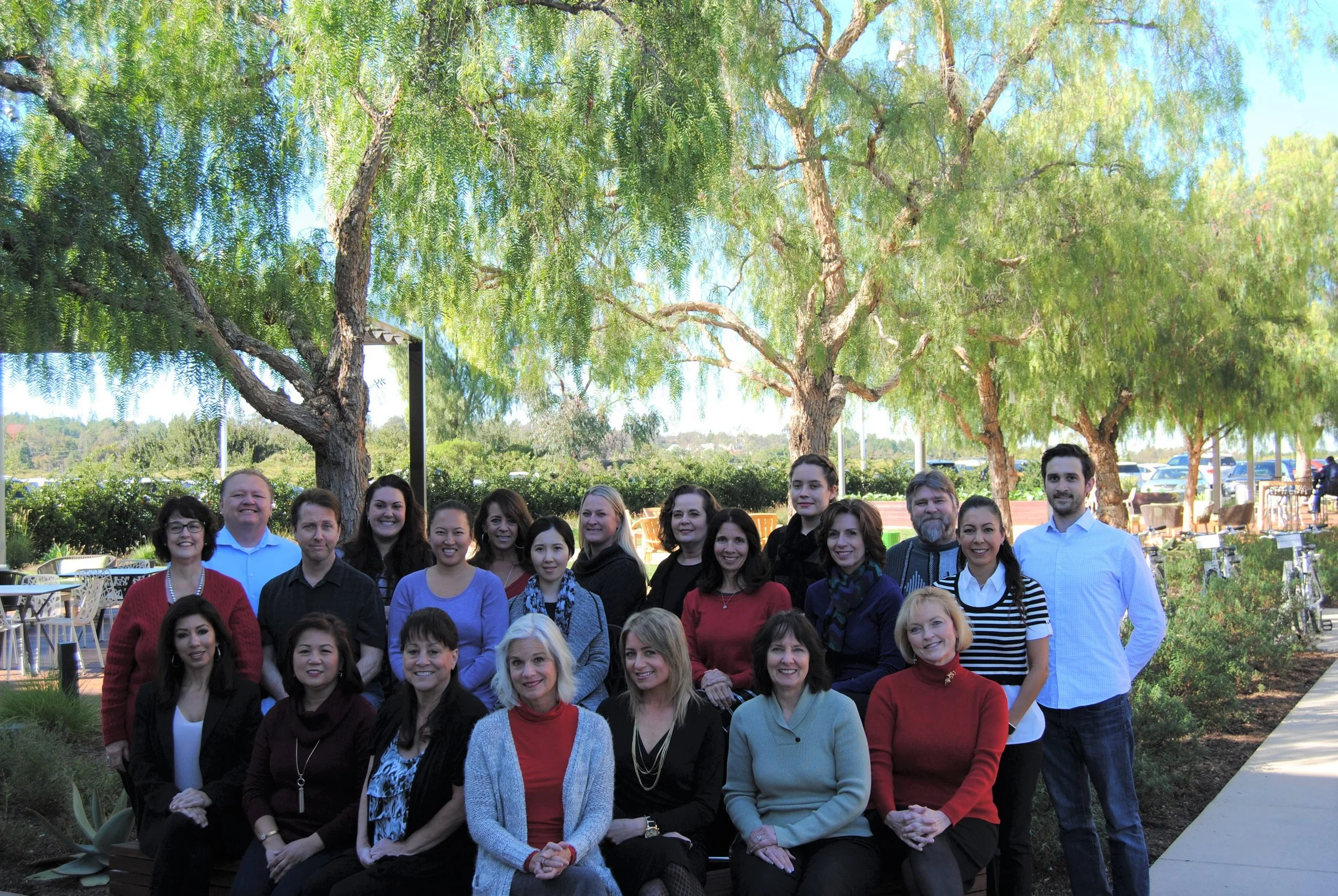
Last staff picture before layoffs. Missing are the Arizona employees.