


What Ignite Teaches Us About the Stories We Carry
When I half-jokingly commented on a Ben Heller post about Ignite and offered to help him, I never dreamed he would take me up on it. I can say it was the best thing I have done in a long while.
If you have never seen an Ignite session at Worldwide Employee Relocation Council (WERC) or in any forum, it is:
A five-minute presentation by a lone presenter
21 slides that advance automatically every 15 seconds
That’s the logistics, but not the impact.
How it all began.
Ben Heller isn’t exactly sure when Ignite presentations at WERC started, but he knew he wanted to be involved in some way, and he has since developed and coached six Ignite events.
He said, “After I had been hosting for a number of years, Jack Jampel gave a presentation that had a profound effect on how I approached coaching. Jack spoke about growing up in a family that had lived through the Holocaust, learning to hide his Judaism and who he was, and eventually becoming comfortable showing up as the full personality we know and love. He didn't know if it was right to tell this story... but I knew it was the right place and format for him, and he agreed... and got a standing ovation. It was a beautiful moment. Everyone who was there remembers it. He shared something deeply personal that helped us understand him, and in doing so gave us something to reflect on in ourselves.”
Ben went on to say, “After that, I began encouraging presenters to spend the first two or three minutes telling their own story. Let us understand what happened to you, why it mattered, and how you experienced it. Give us that connection so we can understand the insight you want to share. It rewards the audience with something meaningful in a very short period of time. We’re all so easily distracted. You look around at many industry presentations and see people on their phones. Ignite can hold our attention. There’s a person in front of us, a story unfolding, and only five minutes to take it all in.”
I remember Jack’s story well. Of all the ones I have seen, that one really stuck with me too. Ben has coached more than 70 participants and given two Ignite presentations of his own.
Managing the unseen stress of relocation.
We are in a people industry. Some of us sell tangible houses, but for the most part we sell and provide services to human beings. And each of those humans has a backstory we may or may not know. That is why our duty of care is so critical.
We don’t know if a marriage is struggling or a child has just made the team and now has been informed they have to move. Or grandparents are about to be separated from the family. Or a sick family member is fighting a losing battle. A million scenarios may run beneath the surface of a relocation, and we may not know how they're affecting the family.
Life is messy. And often goes hidden from public view. One key message this year that resonated with me was ‘don’t carry this alone.’ Pride, embarrassment, or fear may keep us from getting the help we need. It’s often up to us to try to be a safe place for the help they may need.
Is a job worth all of the stress?
Lives uprooted for a job. It’s a miracle we have such a high acceptance rate. Most transferees will work hard to keep their private matters private. Particularly from their employer. That silence can deprive some families of services that might help with decision-making and with the move.
That is why the real estate brokerage and assigned agent are so critical. Relocation agents and the Relocation Directors who manage and train them are the boots-on-the-ground helpers that can pick up the slightest distress while they spend hours in the car house-hunting. Their fiduciary duty lies not only with the RMC, the corporation, but principally with the transferee. Every player in the mobility ecosystem plays their own critical role. That means hearing what is not said. Listening for the unspoken and helping find solutions.
The process.
I read all iterations of the scripts early on. Some started as a train of thought, but as Ben continued to masterfully work with each one to refine the message, I intentionally stopped reading them. Once Ben and the speaker locked the script and slides, rehearsals began. I wanted to hear the message as you all would, and see it for the first time.
Some were rocky at the start, and some were polished almost right out of the gate. But make no mistake: they rehearsed with me for a fraction of their actual rehearsal time. Some recorded themselves and listened to it back on repeat; others performed for friends or family. Each had their own style and method of perfecting their message and stage presence. I was merely there as part of the hype squad.
Brave.
Brave is the word that comes to mind as I think of these people. Brave to step up. Brave to commit the hours. Brave to stand in front of their peers and tell very personal stories. Someone asked me if I was paid to help behind the scenes. I laughed and said, “I probably would have paid them.”
I knew only two of the Ignite presenters well before I participated as a support. As many of them have said, Ignite participants become a family. I am lucky to be on the fringe of that family. Only former Ignite presenters understand what it is truly like to go through the process, not just the five minutes in front of 1000+ peers, but the 30+ hours from beginning to end. They are now a part of a not-so-secret club that only a handful can claim. And each of them will tell you it has changed their lives. The love and support they receive from each other and the audience is overwhelming.
Why Ignite reminds us of humanity and our role in it.
Each year, Ignite has produced one painfully human story after another. If you have never heard an Ignite presentation, it’s not just tragedy. Somehow they are more uplifting than tragic, even though tears may flow from the presenter and most certainly the audience.
Every story reflects a very personal message that isn’t just about the storyteller. Each story allows us to see something from that story in ourselves. Whether it is loss, fear, triumph over adversity, or finding something in ourselves we didn't know existed. Their stories are our stories.
According to Ben, “The goal isn’t to make everyone cry. The goal is to help us feel connected and to give an insight for people to walk away with. There is room for grief and adversity, and there is also room for joy, curiosity, humor, discovery, and a different way of looking at something as ordinary as a business trip.”
“I want the audience to get something out of the experience, and I want the presenter to get something out of it, too. Ideally, we all walk away feeling warm, more connected to one another, and a little closer to being the best humans we can be. To me, there's no greater joy than seeing a presenter shine. Ignite is about getting insights fast. But I've learned that nobody remembers the story or the insight if it wasn't about you. I think there is something to learn in every one of these presentations, alongside the inspiration to be a little better than we were five minutes earlier,” Ben went on to say.
I was out with friends the day after Ignite, after a long, stressful, delay-filled trip home. They were asking me about my trip, and I started telling them about Ignite. They were riveted. At first, one of them said it sounded depressing, and I assured them it was anything but. And then, one by one, they started telling stories about themselves or someone they know that made an impact on them.
I learned through this process that it isn’t so much about the story as about how we adapt to the environment we were thrust into.
Do you have a story to tell?
While 10 speakers are a tiny fraction of the people with a story to tell, I am grateful that each year people continue to step up and pull back the curtain on their lives, exposing the vulnerable underbelly we often try so hard to hide. And that WERC sees the importance of reminding us that we are in a people business and why we need each other every single day.
That vulnerability as a community allows us to dig deep and ensure we see the unspoken challenges of those we serve. We can lift each other up in our industry, so we can surround these families with support and empathy as they navigate the stress of relocating, while also carrying unspoken burdens we may never know about.
I am eternally grateful to Ben Heller for bringing me along for the ride. If you have a story to tell, reach out to Ben Heller via LinkedIn. You never know; it might change your life.
If you were unable to attend WERC in Chicago, you can go to: https://drive.google.com/drive/folders/1kKbbc_oRRc_NgtE58dUjeA1kOApiGHqV?usp=sharing to watch the presentations.
So, here’s to the 2026 class of Ignite and to all of those who have come before them! And a huge thank you to Anupam Singhal and WERC for sharing the stage. When I was looking for a quote to close this out, I didn’t have to look far to find a perfect one from Ignite presenter Diem Allis.
“Sometimes the most meaningful growth happens when we dare to step outside our comfort zone and let others see a part of us we don’t normally share. ❤️” ~Diem Allis, Senior Global Mobility Leader, American Bureau of Shipping
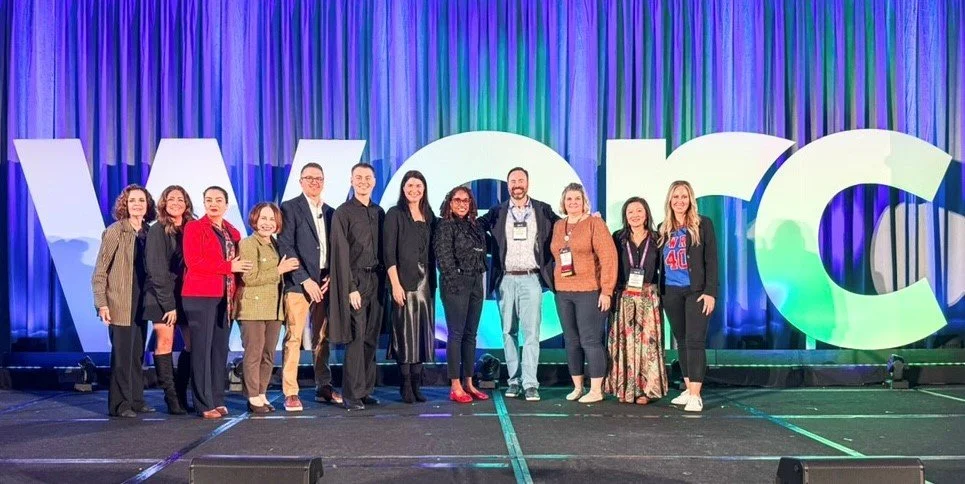
Left to right: Teresa Howe, Elizabeth Martin, Maryam Etminan, Susan Di Leo, Ryan Watroba, Justin Dauenhauer, Brenda Thoeny-Johnson, Lee Frazier, Ben Heller, Katie Rudnick, Diem Allis, and Rachael Schepemaker